
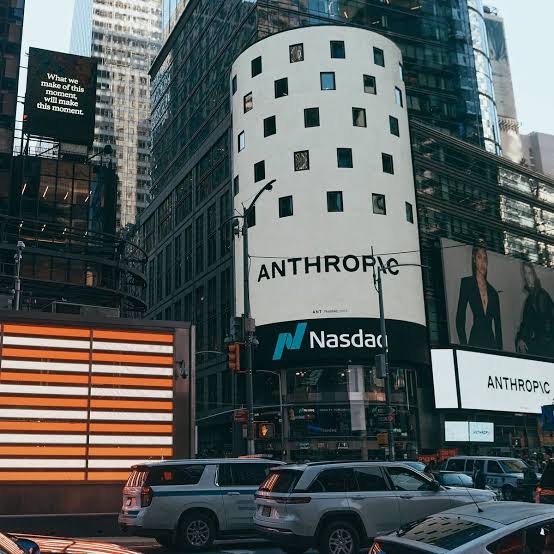

Anthropic, the artificial intelligence giant, was founded five years ago by two siblings, Dario and Daniela Amodei, after they left OpenAI. They said the company was not doing enough to address the safety issues caused by AI. At OpenAI, Dario worked as vice president of research, while Daniela worked as vice president of safety and policy.
In 2021, Dario, his sister, and a group of five other researchers left OpenAI to start their own AI company, Anthropic, which has since emerged as OpenAI’s biggest competitor. Just like OpenAI, it followed the trends already in place, and in March 2023 it launched its own AI assistant, Claude, alongside two large language models (LLMs): Claude and Claude Instant. However, it kept its core philosophy of safety alignment. At first, OpenAI’s ChatGPT had the best model on all benchmarks, while Claude only shined at long-text retrieval.
In late 2024, a software engineer at Anthropic named Boris Cherny drafted a prototype for a tool that could help software engineers write code faster, saving them time and increasing their productivity. That tool was a terminal-based application called Claude Code. In February 2025, the tool became a reality, cementing Anthropic as a bigger player in the AI race, among other reasons.
With that success, Anthropic’s usage and revenue increased. In April 2026, its annualized revenue rose to $30 billion, beating its competitor OpenAI by more than $6 billion.
Following this milestone, Anthropic began eyeing an IPO (becoming a publicly traded company). On October 26th, it filed its S-1, indicating its desire to go public at a $2 trillion valuation. That valuation fell short, however. A few days later, the AI bubble burst in Asia (South Korea and China), which brought the target down to $1 trillion. Yesterday (November 19th, 2026), the dream became a reality when Anthropic (ANT) went public at a $1.5 trillion valuation. Shares opened at $105 and closed at $83, with 980 million shares sold, raising $81.3 billion.
Effects of Anthropic’s IPO
Long before software became a thing, the economy was largely fueled by tangible products and commodities. As time has gone on, however, the economy has shifted, and many of the world’s economic drivers now come from technology. This makes the economy overly reliant on one major economic push, and it has never been as pronounced as in the last five years, during which much of the world’s capital has been thrown into AI companies on the promise of changing the world and turning a profit. This has led many investors to fear a possible AI bubble. Most of them believe that AI is not economically feasible or lucrative. They are skeptical of it, and most do not see it adding economic value so much as disrupting the workforce and the economy in general.
This raises a question: why are so many of them still investing? The answer is the chance of a quick profit if you time it right. This is evident from Anthropic’s IPO. Analysts estimate that the AI bubble will peak in early to mid 2027, so it makes sense for Anthropic to go public now, avoiding the fallout and positioning itself as the major powerhouse in the AI race before the bubble bursts.
Given that the threshold for a global economic depression is a 20% drop in the world’s GDP, Anthropic is likely the last trillion-dollar company to go public this year. This implies that OpenAI cannot follow, because doing so would risk an economic depression. On a high note, this makes Anthropic the biggest powerhouse in the AI space.
Comments ()